Obsession: the fire the gods feared to name
Obsession is a miracle.
It’s the fire the gods feared to name. Because if you name it, you owe it. Obsession arrives uninvited, sits down at your table, and starts rearranging your life like silverware. It blesses and burns. It will give you the greatest joy you’ve ever known and then demand everything in return[1]. You don’t pick it; it picks you. Your only job is to recognize it when it knocks, and, for once in your life, not overthink it.
For Henry Smith, it was a YouTube video.
A teenager in Cape Charles, Virginia, a late bloomer, falling behind, hating school, hating himself a little bit, clicks on “How to Make a Smashburger,” and something in him lights. Not a hobby light. Not a college-essay light. I mean like touching a live wire, and instead of letting go, you grab harder, until the electricity rewrites your nervous system, and you can't remember what it felt like to be unplugged. Six months of nightly tests, a seven-spice blend that drives his family crazy, friends as guinea pigs until they beg for mercy, and then that first clean, quiet hit of pride: I made this. And it made other people happy.
2:17 PM
At 2:12 PM, I stumbled across one of Henry’s Instagram videos.
Instantly curious, I had to know more. How does a 21-year-old end up running a burger restaurant?
Think about it: he’s born, and 21 years later, he's running Smashers, dreaming of making it the biggest burger place in the world. How? What's behind his ambition? What pushes someone like that?
Who is Henry, really? How did he get here? What other businesses has he tried? But more importantly, who do you have to be to start and run a business like this at just 21?
So, at exactly 2:17 PM, I emailed him. I wanted answers.
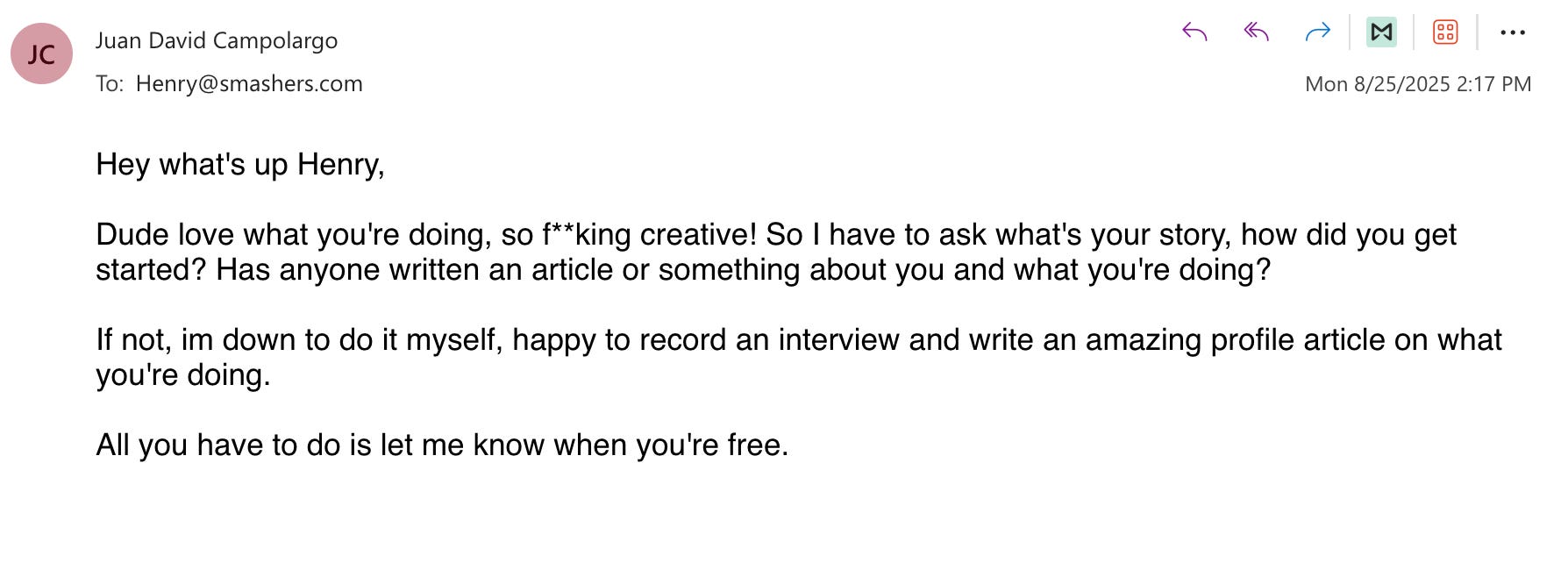
12 minutes later, he replied:

I called him immediately. Four minutes after that, by 2:33 PM, we were already on a Zoom call. No “let's circle back,” no Calendly. Just a quick yes, and an even quicker call[2].
Henry Smith is 21 years old, and he runs Smashers Burgers & Fries. It started as a food trailer on the Eastern Shore. Now, it's a brick-and-mortar at the Norfolk Premium Outlets, with two food trucks feeding the region. But if all you see is the storefront, the cute mural, the viral social media strategy, and the catchy “Come Get Smashed” tagline, you’re missing the real story.
This is the story of Henry Smith, who’s obsessed. Obsessed with creating the ultimate smash burger. Obsessed with turning Smashers into one of the biggest burger brands on the planet.
This is a story of obsession.
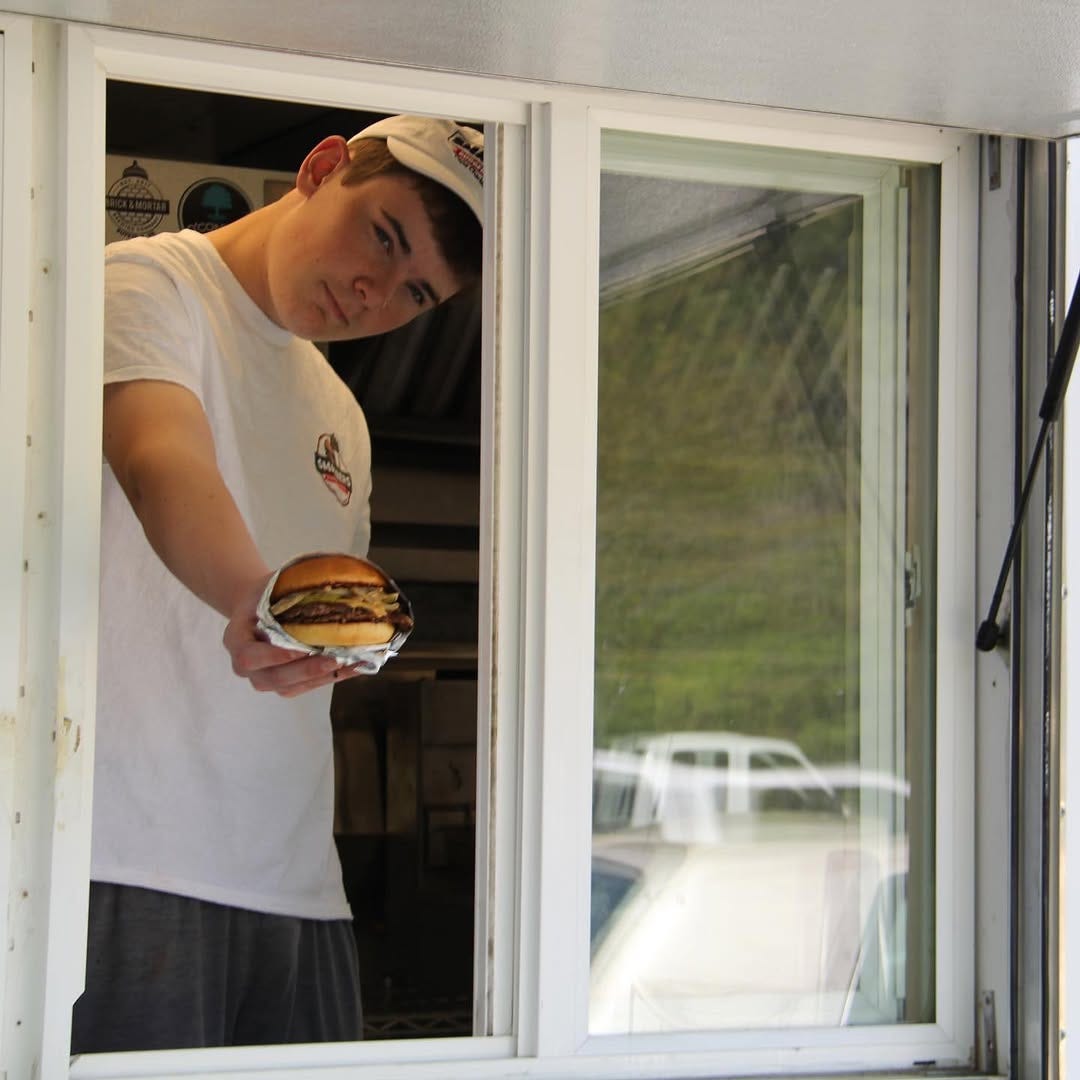
Before the spatula
Henry tells me he never felt like himself in high school.
Ages 14–18 were rough; he didn’t like who he was. “I was invisible,” he says. Late puberty. Sports slipped away. Boarding school reset the social ladder, and he fell hard to the bottom rung. Grades followed (1.7 GPA and a sinking feeling). He didn’t like how he looked, didn’t like how he sounded, and didn’t like the person he was becoming.
The world shrank to a dorm room, a hoodie, a screen.
A few things stuck with him: Graham Stephan’s investing videos, credit cards, and the basic math of money. The first sentence of his senior speech was: “I like money.”
Another influence was Jordan Peterson. Henry isn’t his biggest fan now, but back then, his lectures and his book, 12 Rules for Life, rewired the soundtrack in his head. Responsibility as a path out of chaos. “Find the biggest rock you can carry and carry it.”
It gave him language for the feeling already scratching at the door: work might save me.
Then the burger video landed, and obsession did what obsession does: it cleared a path. Six months of experiments hardened into a promise to himself: if he could make the best burger he knew how to make, and do it fast, and do it consistently, maybe he could build a life around that.
His parents gave him a $40,000 loan with the same look you give when your kid says they’re quitting school to start a band: half pride, half panic, a knot in the gut. As entrepreneurs themselves, they knew exactly how often dreams break the people chasing them.
Henry dragged a food trailer to the Cape Charles beachfront, hired the friends he’d grown up with, and cooked until the line made him forget himself.
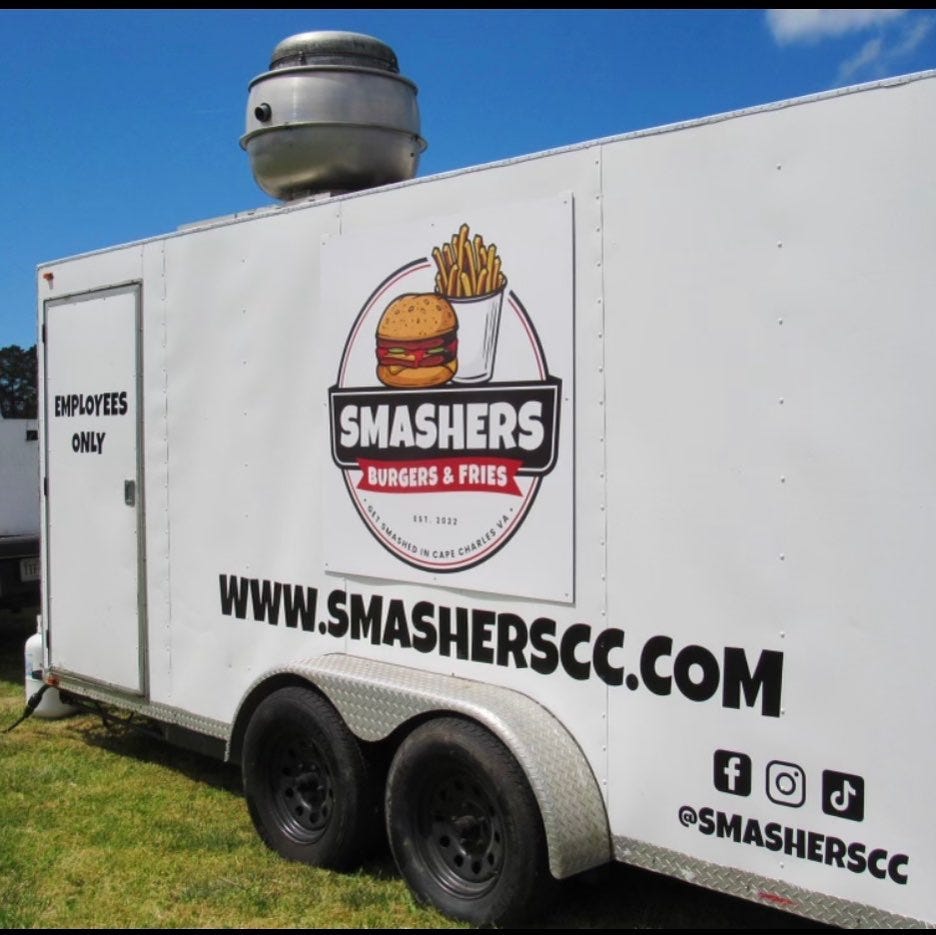
Summer crowds. 60 to 80-hour weeks. The product was good enough that he had to work. That’s the best kind of discipline: the kind your customers impose on you.
That insecurity didn’t vanish; it converted into standards. If his identity is on the table, then the burger has to be right.
He tried college to be polite, lasted a semester, and dropped out with relief. He didn’t want the label of dropout, he just wanted to get back to work. In lectures, he daydreamed about line flow, bun toast, and volume capacity. He was already saying “simplicity is our number one core value” the way other 19-year-olds said “bro.”
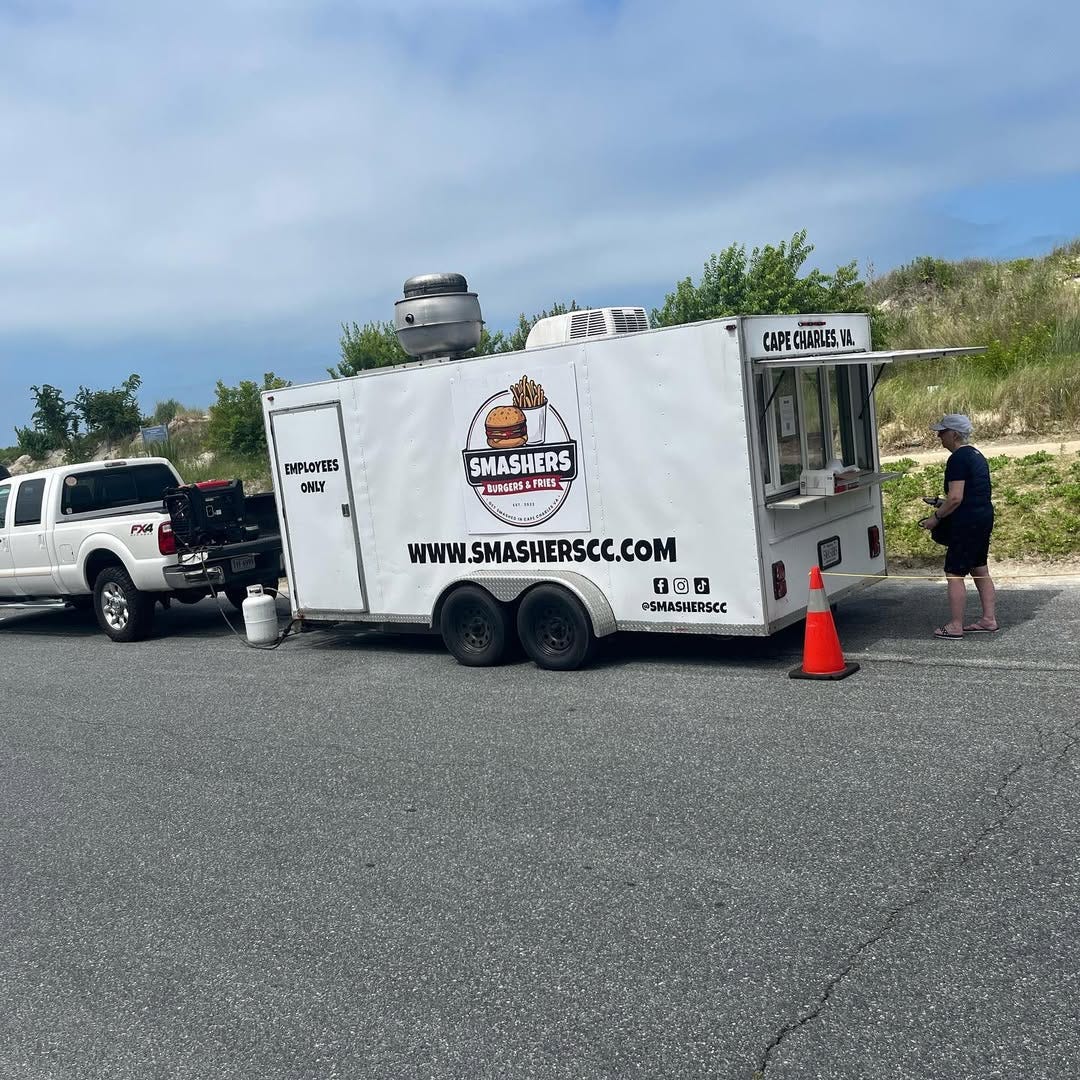
The next summer, he brought Smashers back. Alongside it, he tried to launch a second concept, an ice cream truck, because, well, “opportunity,” right?
“It was so stupid,” he says. “I called it Creamers. You get smashed and you get creamed. I was a child. I was an idiot.”
He cringes at the name now, but the misstep proved useful. Every focused founder learns the same lesson: the woman in the red dress is a distraction. He sold the truck. He kept making burgers.
He planned to open a restaurant before Smashers’ third summer. But the buildout dragged on, and deadlines slipped. So he ran the trailer for a third season.
By mid-August, just as the Cape Charles operation shut down, the restaurant was finally ready.
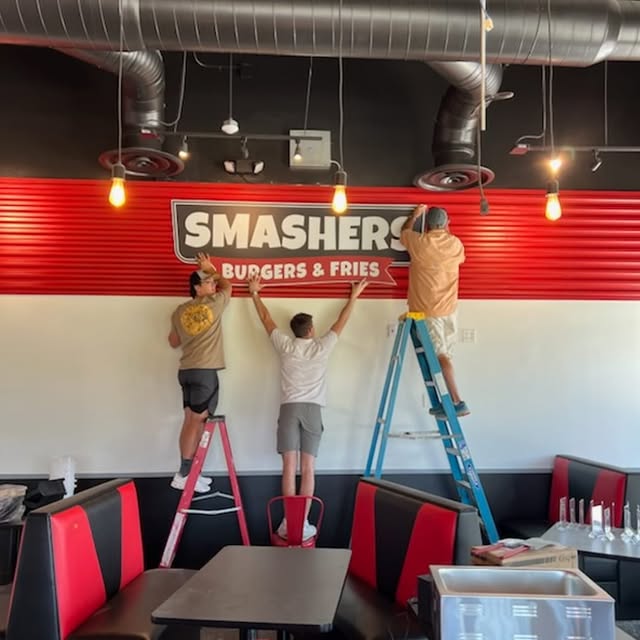
The first brick-and-mortar
Cape Charles is seasonal, with three great summer months and then a ghost town, so he started calling commercial realtors across southeastern Virginia.
Eighty, maybe ninety commercial realtors. “Hi, my name is Henry Smith, I run a food truck called Smashers. I’m looking for a second-generation space with a hood or the bones for one. End-cap would be crazy, but I’ll look at anything.” Most said no. Some were polite. A few were condescending in that paper-thin way adults get when they think they’re hiding it.
And then there was the one who said the quiet part out loud.
“I don’t want to be part of your story if you fail.”
That sentence hit like a slap. He went home and did the thing you do at twenty when your pride and your hunger collide: he wrote a long, painfully earnest email about who he is, how hard he works, why he was serious. He hit send. He immediately cringed. He paced his room, replayed the call, felt small, then felt mad, then felt the click, the little ignition switch that flips embarrassment into fuel. Okay. Remember this.
He kept calling.
Too young. Not serious. “Call us after you’ve got two stores.” He kept calling.
And then one broker, Chanda Chan, said yes. She took him under her wing, started calling him her little brother, and pulled a space that wasn’t even on the market, a two-day-old end-cap at the Norfolk Premium Outlets.
Light, parking, flow. He toured it and could see the line in his head.
He signed his first lease two weeks after his twentieth birthday and hated that detail because he wanted to sign it as a teenager. That’s how specific his brain is.
He borrowed again from his parents (about $75k), but the bigger deal was the guaranty. It’s not just money; it’s your parents putting their name behind your five-year bet. If rent is $5,000 a month, that’s a $300,000 signature. You sleep differently with that on the wall.
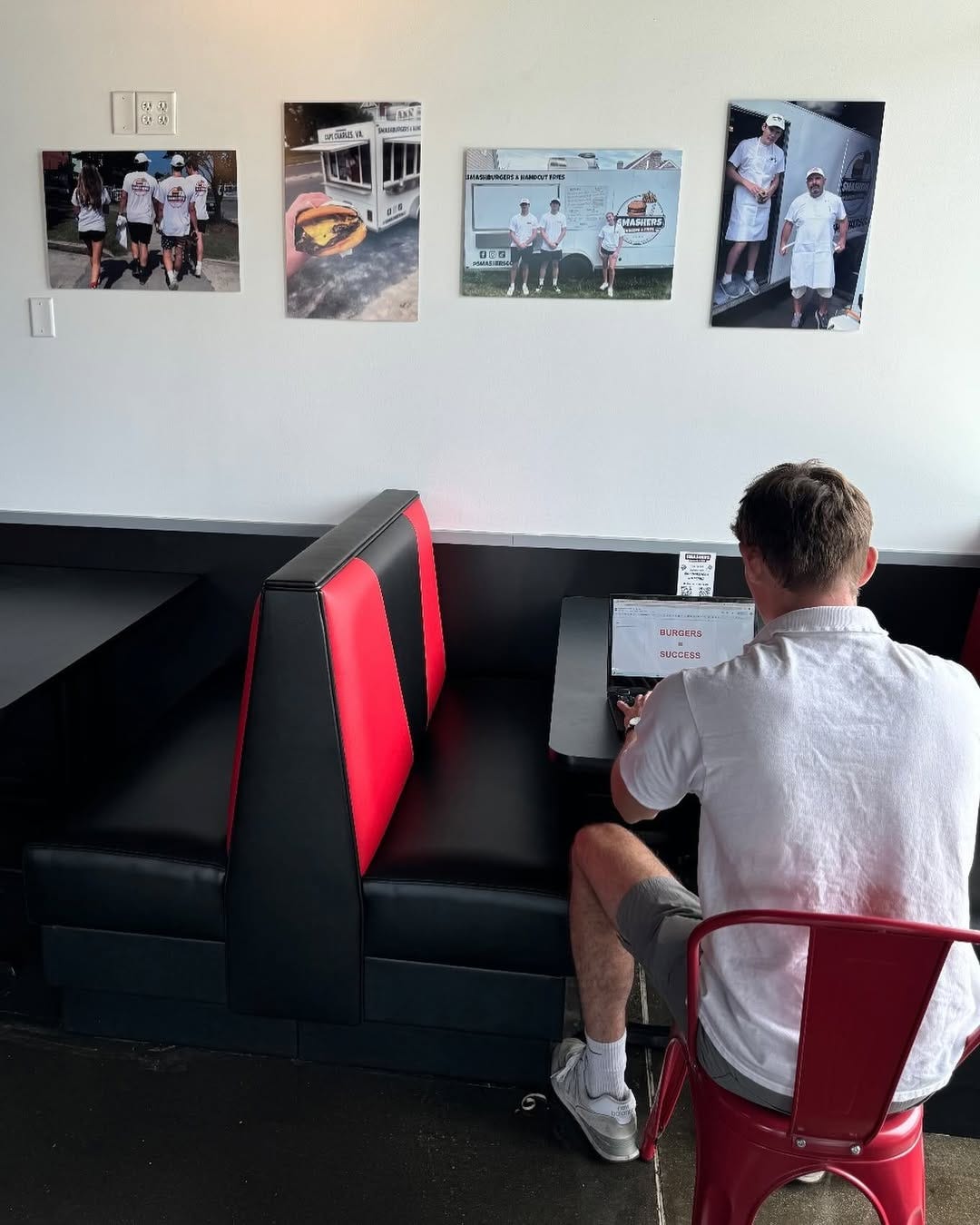
He opened in September. Inside: a mural of the OG trailer and one of his first Cape Charles crew, so he can’t forget where this started. Outside: a corner spot with steady foot traffic so he can learn fast under pressure. He hired the best people he could find and then, in real time, learned how to lead them.
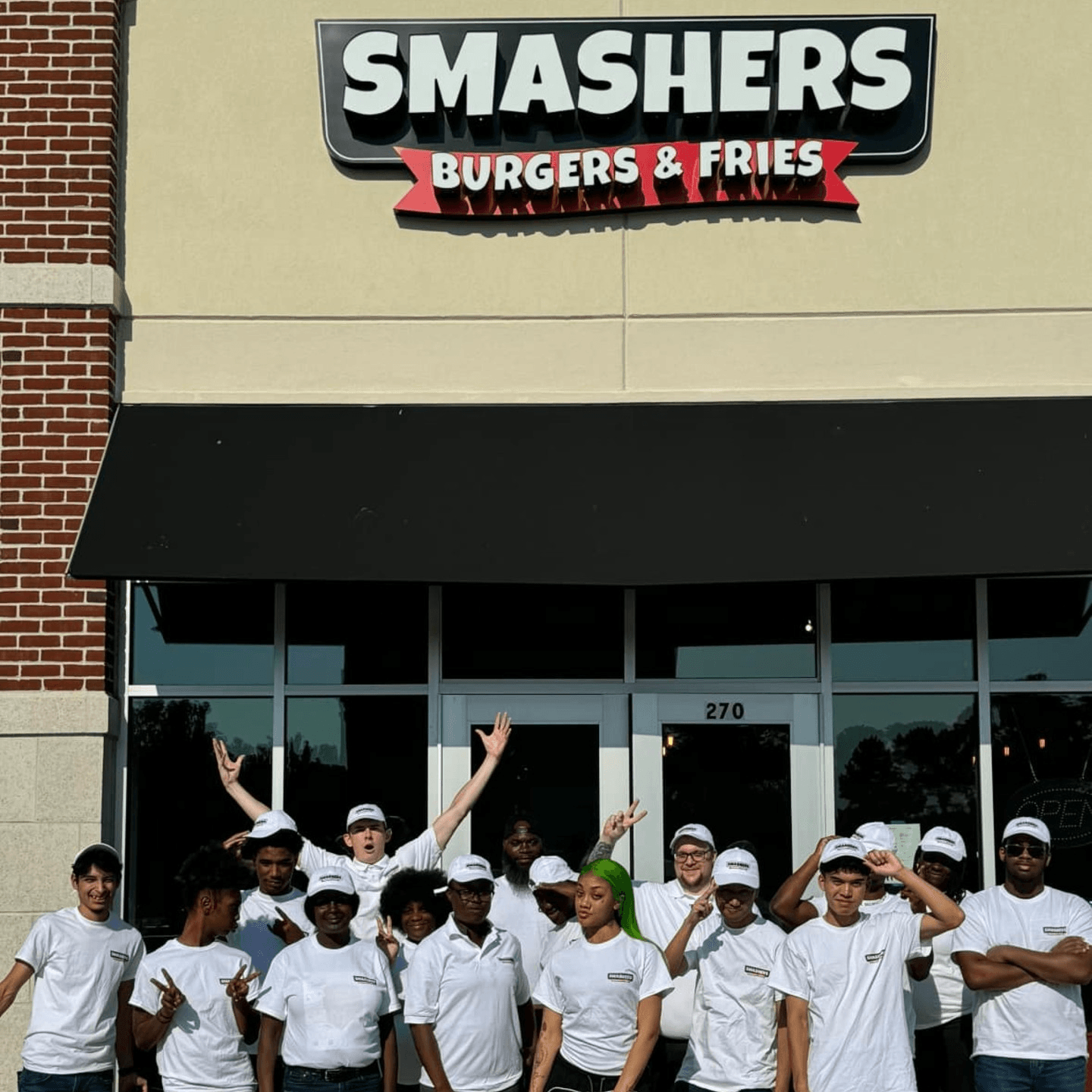
First month? By his own count, 12,728 smashburgers and 4,705 orders of fries. Do the math[3], and you’re looking at roughly ~400 burgers a day, ~40 an hour, a burger every ~90 seconds across open hours[4]. It felt like trying to ride a tornado and mop the floor at the same time.
Then reality threw its first punch.
Day one, he had to fire someone. A drug issue. Scary, necessary, done.
He hated how he handled it—over the phone, voice shaking, rushing through the words like a kid rehearsing a speech. It was the first time he’d ever let anyone go, and it was someone who’d been around for months, someone who’d helped set up booths and bolt down chairs before opening day. That made it harder.
But the situation left no wiggle room. Standards matter, especially when you’re building something fragile and new. He ripped the Band-Aid off, and in hindsight, he was glad it happened on day one. It set the tone.
Operation Trojan Burger
Good founders study. Great founders learn from the inside.[5]
In Henry’s head, the biggest competitor to beat isn’t necessarily a brand; it’s their systems. So he got a job at Five Guys.
He took a bathroom mirror selfie and labeled the experiment “Operation Trojan Burger.”
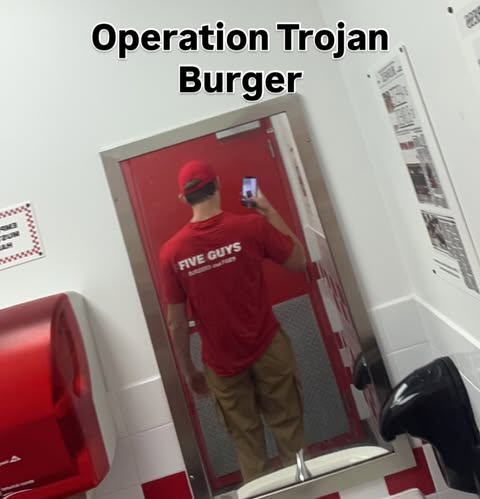
Then he worked four days across different shifts to study everything: how the line moved, who stood where, how they called tickets, how they trained new hires, and how they standardized a process to almost zero human variance. He wanted to feel the choreography in his own body. He wanted to see what a scaled system feels like when it’s humming.
Then he found their internal training portal, Five Guys University, and watched every relevant training module[6]. Not to copy the food. To absorb the systems. To learn how a big operator compresses chaos into checklists.
The heist ended with a poach. A month later, he called the store to track down Jacob, the manager he respected, and asked him to meet. Jacob hung up the first time. Henry called back. They met. Henry laid out the vision. “I want to build something that deserves to exist. I will pay well and give you real responsibility.” Jacob said yes.
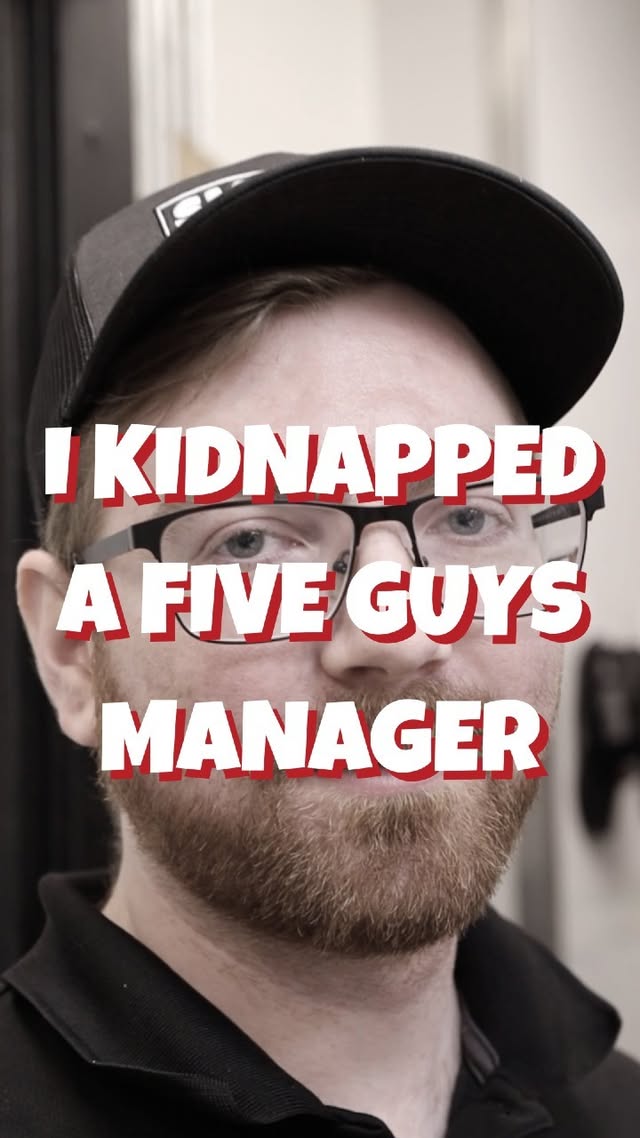
He’s now the general manager at Smashers.
Inside, the kitchen found its rhythm, but the world couldn’t hear it. Now, Henry needed volume, and not just on the grill.
The story of Smashers needed to get louder.
Social media, identity on the line
At first, he barely posted. Too busy. Too shy. When he did, it was safe: burger shots, the truck, a smiling team photo.
The real story was fear, of what old classmates would think, of looking thirsty, of trying and being seen trying. “When I tell folks to put their identity on the line, I didn’t do that in the beginning,” he admits.
He was being “too cool.” But it was all a trap. Try-hard is a compliment. And no one has said it better than Tyler, The Creator:
“I know a lot of people who make things but don’t stand proudly by their stuff. It’s something I’m noticing it a lot with the generation right under me. I don’t know if they too cool, or if they don’t want to look thirsty, or if they’re just not proud of their shit.
But like—they’ll put a song out, they’ll put it in their story, and that’s it.
You went through something, you wrote words down, you figured it out in the structural format, found music to go along with it, you recorded it. Most of the time, you don’t do it in one take, you go back and forth, fix some parts, get some parts replayed, you edit it, you mix it, sample clearances, pay the mixer, this and that. They go pay some kid to do an album cover. They do the album cover. It’s a whole thing.
And you mean to tell me you’re gonna be passive with your own shit? Just put it on your story once? Are you fucking crazy, bro?I’m still promoting my album that came out in June—it’s a year out and I’m still out here like, Call Me If You Get Lost.
What I noticed is some of these younger guys and girls, they’re like, ‘oh yeah, I got a song out,’ and then they forget about it.
And I’m like, no—let motherfuckers know. Tell people.
When I first put the perfume out, dude, I had bags of the sample just walking up to people like, ‘Hi, I’m Tyler, I made this.’
Because I put time and love and too much energy into this finished project just to put it on Instagram and forget about it.
Like, no—promote your shit. Let people know. Be proud of that shit you made.”
Then he made a real decision: if marketing is oxygen, he needed a bigger lung. On his third try, he found the right marketing partner, Dylan, and started to learn to put himself in front of the camera.
He didn’t want the same polished, cookie-cutter restaurant content that every restaurant pumps out. He wanted weird, fast, sometimes risky. Dark, satirical, a little juvenile, very human. He rides the line on purpose. If a post threatens the brand, he kills it. If it embarrasses him a little, he posts it anyway. Obscurity is costlier than cringe.
The rules are simple: be interesting or be invisible. Hook people in two or three seconds. Commit. Escalate. End with a left turn. Don’t wink and apologize to the camera, go all the way or don’t even post.
Take the “robbery” sketch, clearly staged, where a would-be thief tries to “steal” burgers while the staff plays along. That video exploded: 100 times the views of a typical Reel. Millions and millions of views. Henry says more than 200 customers showed up because of that one video alone.
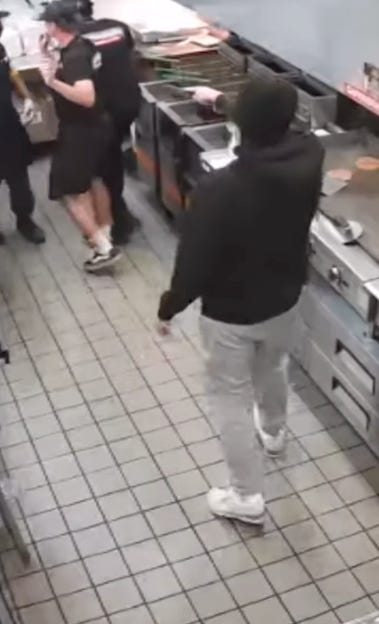
Sure, some people hate the videos. Not everyone likes satire. But the skits are playful, safe, and always lead back to the food. Since then, engagement on Instagram and TikTok has spiked and stayed there. In just eight months, the account went from “cute local spot” to “oh, these guys again” to “send me the address, we’re going tonight.”
Henry is part of a bigger shift: local businesses turning themselves into niche creators to market their products.
The winners aren’t bland or polished. They stand out. They build their identity. You don’t get attention by aiming for the middle.
You get it by being specific, silly, weird, disruptive, and then proving yourself with a great product.
When I asked him if being weird and silly had paid off. He didn’t even let me finish:
“A million percent. Absolutely. A million percent.
When I was posting videos in the beginning and they got no traction, because I was still figuring everything out, I would get calls.
I got calls from my dad saying, ‘Hey, what was that video about? That was pretty weird.’
And you know, when that comes from your own father, it hits.
My buddies would be like, ‘Dude, what’s going on? Are you okay?’
But you end up finding your rhythm.
If you’re willing to keep embarrassing yourself for a little bit, you’ll find it.
Honestly, the cringiest part about everything isn’t posting weird videos, it’s stopping. It’s giving up.”
And this is where identity circles back.
He knows who he isn’t. He’s not a party kid. He doesn’t drink or game. He just likes to work. People tell him to “balance” more; he shrugs. It’s not that he never wonders. He’ll scroll past friends at clubs and bonfires and feel the flicker of FOMO, then remember how it feels when he actually goes, he would just find himself thinking about work. There’s a price tag to building something great, and his edge is choosing to pay it, again and again. He’s a man on a mission.
So he built a stage. A small one, on a phone. Some days, he’s the mean owner. Some days, the lazy owner. Sometimes, the clueless boss deserves to be roasted. It’s all a play, a satire that lets the audience feel something, laugh at a villain, and root for a crew. And it isn’t for its own sake. The theater is a vehicle for a larger goal: get people fired up, get them to Smashers, then win them over with the food.
We’ve always acted. At dinner tables and job interviews, first dates and last chances. But the cameras have made it continuous. The line between performing and being has dissolved because the take never really ends. If everything is on stage, what’s left backstage? If we’re always aware of the lens, will we ever stop acting? Where does the self live when the feed keeps rolling?
Maybe the self is not the raw footage. Maybe it’s the cut you stand by, the choices you keep making when no one’s watching. Identity, then, is a verb: commitments repeated until they calcify.
Henry’s answer is to own the performance. He puts his identity on the line by creating a character, like a novelist crafting a narrator, an entrepreneur built to entertain, to pull attention, to bring people to the window. The on-camera Henry is loud, fast, sometimes abrasive, and happy to play the antagonist if it moves the story. The goal is not realism; it’s resonance.
But the character is a tool, not a mask for a lie.
The real Henry is quieter. Calmer. Kind to the crew. Twenty-one and human: tightening systems, learning how strict to be and when to be soft, figuring out what he believes about money, time, and trust. He’s excited about the next experiment, annoyed by wasted motion, and curious about how much better his burgers can be. He’s still building the person who can carry the company he wants.
That’s the tension, and the trick. The persona opens the door; the person keeps it open. On camera, he acts as the boss. Off camera, he is one.
Which brings us back to the thesis: put your identity on the line.
Not by dumping your diary into the feed, but by choosing a version of yourself that advances the mission and committing to it in public. Make it specific. Make it proud. If it embarrasses you a little, post it. Then let the work speak louder than the pose.
The physics of scale
Under the skits and the sizzle is the boring math that decides who lives.
At one store, you’re a price taker. At three, you negotiate. Three stores mean better purchasing power on Certified Angus Beef (CAB). Lower COGS (cost of goods sold) means he can drop the price without touching quality, and that means more volume.
Lower Price + Same Quality = More Volume.
Ask Henry about beef and he talks in numbers: yields (how much he actually gets), shrink (how much he loses), weekly CAB quotes (what the market price is this week). Ask him about equipment, and he’ll tell you a second-gen hood is sometimes worth more than a hot corner if it keeps build-out costs down. Ask him about fries and hear him think out loud about beef tallow. Ask him about growth, and he’ll tell you why corporate-owned stores protect the product while sloppy franchising can ruin a reputation in a weekend. Ask him about menus, and he’ll say simplicity scales because seconds do.
Todd Graves taught the entire world the simplicity lesson with Raising Cane’s: do one thing, chicken fingers, better than anybody else, then build the whole machine to move that one thing faster.
He admires Chick-fil-A’s operator model because it protects the brand, and In-N-Out’s supply chain because it protects the guest. He’s allergic to franchise-fee sugar highs that wreck reputations. Corporate stores first. Slower, but his.
He’s rebuilding the tech stack under the counter, moving loyalty onto a platform that actually talks to his POS (point of sale), because ringing points at the register is faster than telling a guest to go online later. Microseconds are macro when you compound them.
He knows you can’t out-brand inconsistent food forever. (Yes, he has strong opinions about some chains. No, you don’t want to be on the wrong end of his price-to-quality rant. He will tell you straight, on camera, on the record, that some chains get away with robbery. Cough cough, Five Guys.)
What is next for Henry Smith and Smashers?
Five stores next, systems first.
What breaks if #2 isn’t right? Training pipeline. Vendor relationships. The founder’s calendar. He’s trying to build for that before it breaks. Grow across the 757, then Virginia, then border states. One location, then another.
“Alright, mothertrucker, you'll see."
This is the story of a kid who didn’t like himself and found a problem heavy enough to carry. Not a grand vision. A burger. Then a better burger. Then a faster, more consistent one. Ironically, he didn’t eat his first burger until age thirteen; the picky kid now runs a burger shop.
“The massive irony of my life.”
—Henry Smith
Henry didn’t try his first burger until he was thirteen. Eight years later, at 21, he runs Smashers, a smashburger shop at Norfolk Premium Outlets. In its first month, they sold ≈12,700 burgers (about 400/day) and grew demand with fast, unconventional social videos
People always ask for the “secret.” There isn’t one.
There’s a twenty-one-year-old who called ninety realtors and ate a “no” that stung enough to become fuel. There’s a founder who infiltrated a competitor to study how professionals move when the game is real. There’s a first month where the tally hit 12,728 burgers and 4,705 fries, and a crew that somehow kept up. There’s a staged sketch that blew up and a dining room that filled because the food could carry the attention it earned.
One of the commercial realtors, he straight-up just told me, "I don't want to be a part of your story if you fail." And I really internalized that. And I said, "Alright, mothertrucker, you'll see."
—Henry Smith
He admits that fuel still burns: the need to prove that a good product forces you to work, that hours spent on the line teach you what you’re capable of, that if you put your identity on the table, you stop calculating when to quit.
He wants to make his parents proud. He wants to win on product and price, not just on social media. He wants five brick-and-mortar stores on the board, then more, with systems strong enough that #2 doesn’t make #1 wobble. He will hire people better than him and then stay, unapologetically, in the details.
And there’s the other fuel, the dangerous one founders never admit until late at night, the chip that doesn’t go away. Palmer Luckey calls it vengeance; I like the kinder word correction. You correct your past by refusing to repeat it. You correct the market by showing customers what “good” looks like, so everyone else has to catch up. You correct lazy “best practices” by doing the obvious thing no one has the patience to do every single time. It’s why a Smashers burger tastes like someone cared about it before you ordered it. It’s why he’ll choose slow, corporate growth over a fast-buck franchise. It’s why he’ll post the “weird” video that pushes the edge and then delete the one that threatens the brand. He’s young; our culture's low expectations hand him a mask, and behind it, he's smiling. Because while they call him just a kid, he’s already thinking of his next video, his next store, daring to swing bigger, push farther, and relentlessly chase down his mission.
This is, at bottom, a love story. A kid falls for a burger and then for the feeling of making other people happy*.* He falls for simplicity, short menu, short queue, short path from grill to hand, and fights to protect it because simplicity is the most fragile thing in business. He falls for work as a worthy way to live, which is rarer than it should be, and decides to be the kind of founder who shows up, not the kind who shows off.
Love is what you care about; obsession is what you’re willing to care about every day. Love says *I’ll be here;*obsession says I’ll be here at 5:00 a.m. with a checklist. Love is attention; obsession is attention that refuses to blink.
Obsession gives love a shape where meaning can live.
Maybe that’s the whole point of why we’re here: finding something we care about deeply and giving ourselves to it until it changes us. If love is the “why,” obsession is the “how.” And if you’re lucky, the work becomes a way to love the world back, one pressed patty, one bag across the window, one small promise kept.
When I asked him about luck versus hard work, he didn't shy away from recognizing fate’s role. He spoke openly about the blessings he received: parents who could provide financial backing and, crucially, trust him enough to sign their names on a significant lease. Yet he equally emphasized the relentless grind: those scorching summer days when exhaustion nearly broke him, with the endless line of customers becoming his reason to push forward.
Henry has the proof that when you truly commit yourself to a purpose, the right people find their way to you. Take Chanda, for example, the broker who saw potential long before anyone else did. Genuine ambition attracts allies who turn dreams into reality.
I don’t know if Smashers will become a billion-dollar company or if Hollywood will ever dramatize Henry’s story. Maybe. Maybe not. That’s besides the point.
He's already won something bigger: clarity about who he is and the courage to chase what truly matters to him.
He found the rock he could carry and then built a life around carrying it: a burger pressed right, a line that moves, a team that wins, a standard that doesn’t bend.
When Henry says Smashers will be a national brand, I believe him, not because he says it confidently, but because he’s still obsessed with getting the basics right, every single day, every single burger. The 1.7-GPA kid who wouldn’t face the mirror became the operator who made ninety calls, fired someone on day one, worked Trojan shifts inside a competitor, and filmed the skits that pulled a crowd. The lesson is quieter than the videos: keep one promise so precisely, for so long, that it changes who you are.
Obsession found him. The miracle is what he’s doing with it.
Learn more about Henry Smith and Smashers:
- My Conversation with Henry: How a 21-Year-Old Dropout Is Building the Next Burger Empire (Smashers: Burgers & Fries)
- Smashers Website
- Smashers Instagram
- Smashers YouTube
- Henry Smith's Instagram
- If you’re new here… this is my story
Similar projects I’ve worked on:
- Pico Masala: How I Built a Restaurant Empire—Then Gave It Away for Free
- The Unexpected Birthplace of a Trillion-Dollar Company (Denny’s & Nvidia Ad)
- An upcoming book on the story and business of Cooper’s Hawk (unreleased)
If you’re into interesting ideas (like the one you just read), join my Updates, and I’ll send you new essays right when they come out.
Notes
[1]
If you’re lucky, it gives you a glimpse of why you’re on Earth.
If you’re unlucky, it’s the same thing, because it will also consume you if you let it.
I still hope you get obsessed!
[2]
I knew he was legit when he replied so quickly to my email.
Told him about the interview, and he just said sure.
Three minutes later, we were on Zoom, straight into it. No bullshit about scheduling, no Calendly links, just fast.
But you have to keep in mind, we talked for roughly two hours, and he had no idea who I was.
Didn’t look me up, nothing.
Only at the end, he was like, almost laughing, “Yo, I accepted, but I have no idea who the fuck you are.” He said more nicely, of course. Then, I explained.
No overthinking whatsoever. He knew his stuff, knew the numbers, had obsessed over competitors, studied the field, and it showed.
[3]
We can continue doing some quick and rough math.
Smashers’ first month? 12,728 smashburgers and 4,705 orders of fries.
Simple math:
- 12,728 × $10.99 = $139,880.72
- 4,705 × $4.99 = $23,477.95
That’s $163,358.67 in one month, on just burgers and fries. Annualized, you’re looking at well over a million in revenue.
And that’s conservative, because the menu also has higher-ticket burgers, shakes, and add-ons. Oh, don’t forget about the food trucks.
Of course, that’s not all profit. There’s lease, food cost, payroll, marketing, taxes, the whole stack. And if you ask him, taxes are at the very top of the hate list.
[4]
I don’t actually know the pace. It’s an educated guess.
[5]
Besides Five Guys, he also tried to get a job at Shake Shack, but they knew who he was.
[6]
He accessed training materials as an employee.