A Mexican Quinceañera in a Barn in the Midwest
I’m in a barn about 80 miles from downtown Chicago.
Love is Blue starts playing.
Wait.
I know this.
“This is the intro to Rick Rubin’s Tetragrammaton[1] podcast.” I’ve heard this intro a million times, but I can tell this is different. I’m hearing something I already know, only now I’m hearing where it came from.[2]
The song starts small, almost shy. There’s sadness in it, but also innocence, and underneath both of those, something happy trying to get out. Then, around the 0:33 mark, the strings arrive and the whole thing suddenly gets wider. What began as something tiny and intimate now has an orchestra behind it.
Happy/sad.
Forward/back.
There is a push-and-pull happening.[3]
I opened my eyes. I had to.
It was the beginning of the many carefully choreographed dances, the kind that take months of rehearsals and preparation. The chambelanes, the young men in her court, stepped out in matching outfits alongside the damas, the young women, also dressed alike. Together they formed the corte de honor, the quinceañera’s court. At the center of it all was the quinceañera herself, unmistakably different from everyone around her, dressed to be the focus of every entrance, turn, and formation.
And then there was the setting. From the outside, the barn looked a little run-down. Inside, though, you could tell someone had rebuilt much of the main wooden frame. The old wood along the sides had gone dark with age, while the newer beams overhead were still pale. Time had not gotten to them yet.
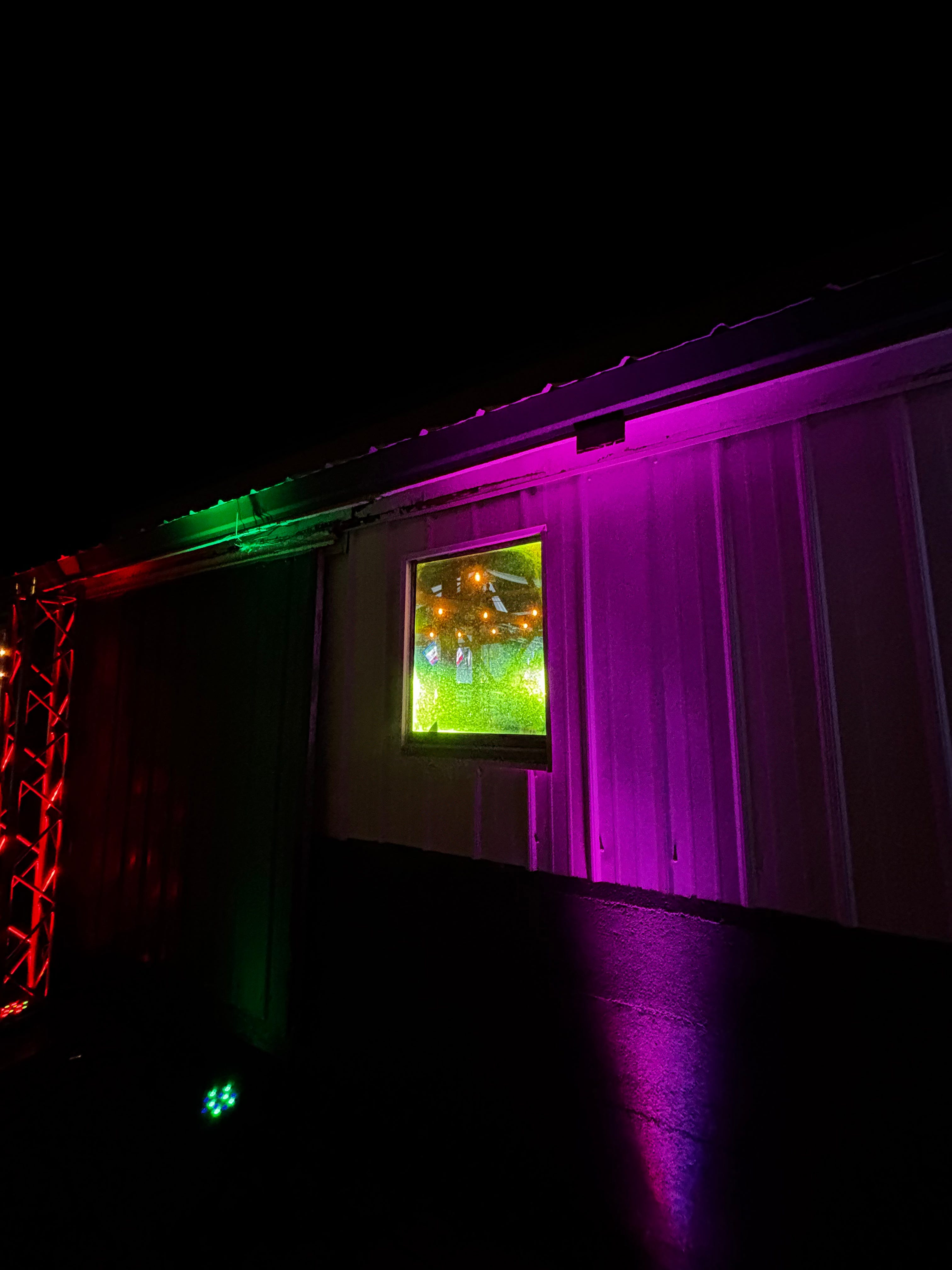
Suspended from that mix of old and new was something closer to a small concert production. Aluminum lighting trusses loaded with moving lights. White, green, and red beams swept across the old wood. Small LED video screens flashed graphics and the colors of the Mexican flag. Mirror balls broke the light into little pieces and scattered them across the walls and dance floor.
Above everything, warm Edison bulbs zigzagged between the massive wooden beams. Whenever the brighter lights dropped away, the whole room went amber. And underneath it all was the sound system. When the bass hit, the whole barn vibrated. You felt it through the floor, the tables, the old wood around us. It was the kind of loud that made you reach for your pocket and hope you had remembered the orange earplugs.
Then the music changed, the court moved into position, and months of practice suddenly became a few minutes in front of everyone.
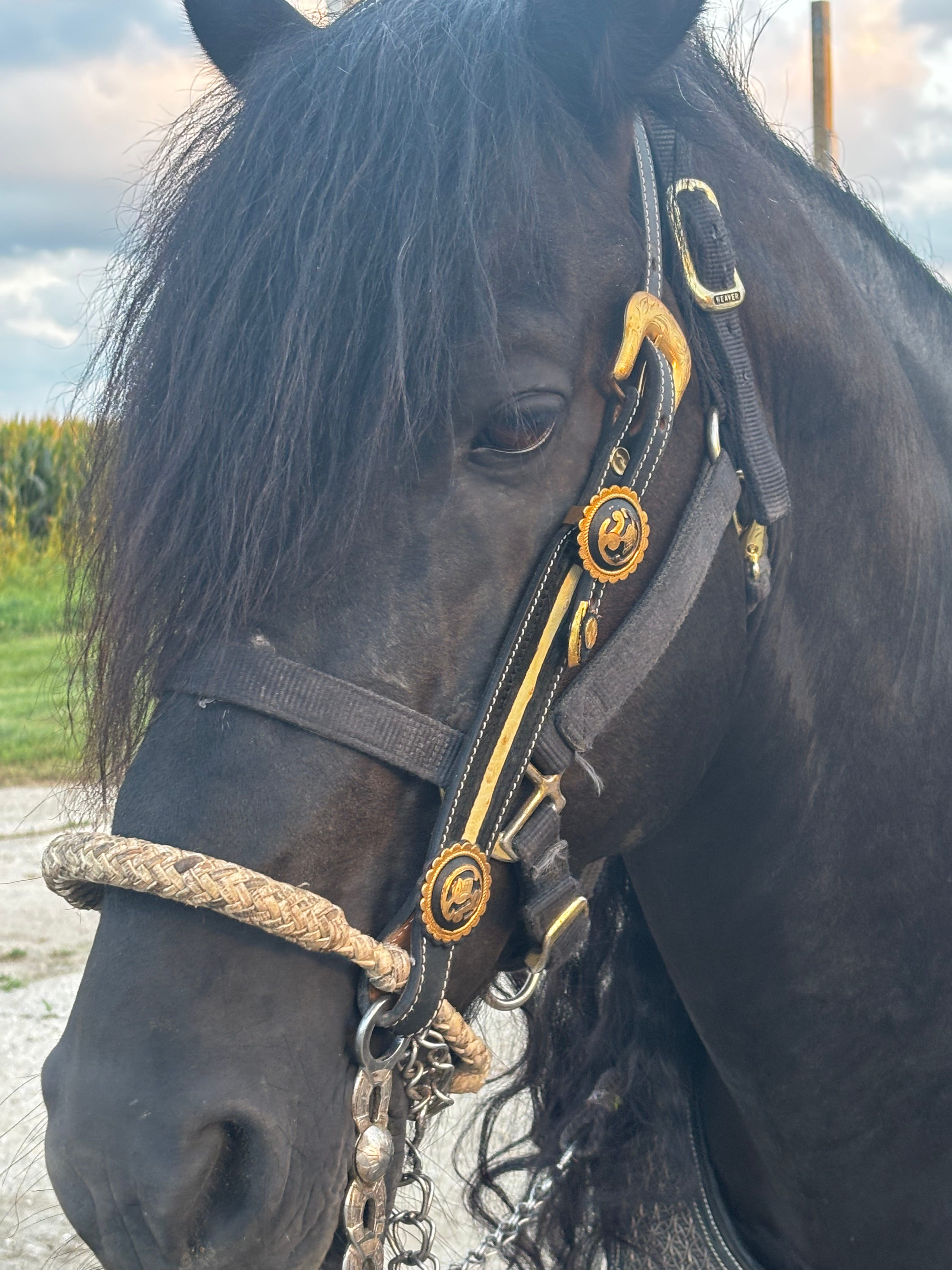
When I first arrived at the ranch, which bore the family’s last name, the first thing I noticed was a black horse. From a distance, he looked grand. Tenía mejor lejos que cerca. He looked better from afar. Still, he was a good horse, a Quarter Horse mixed with some other breed I forgot.
The ranch had rented him for the occasion, and his owner had come with him. He told me the horse was Mexican and had cost him $15,000. He was standing there holding the reins, helping kids, shorter adults, and the occasional puffed-up “I used to ride horses” guy who, once he was actually next to the horse, seemed to have forgotten how.
All while holding a Modelo in his other hand. He offered me one before opening his own and continuing the story.
Meanwhile, his wife kept signaling at him, increasingly less subtly, to stop talking to me and make sure no one fell off the horse.
I’m not sure I believe the $15,000. But I do believe the $4,000 he said he paid to quarantine the horse in El Paso, which sounded like an interesting business.
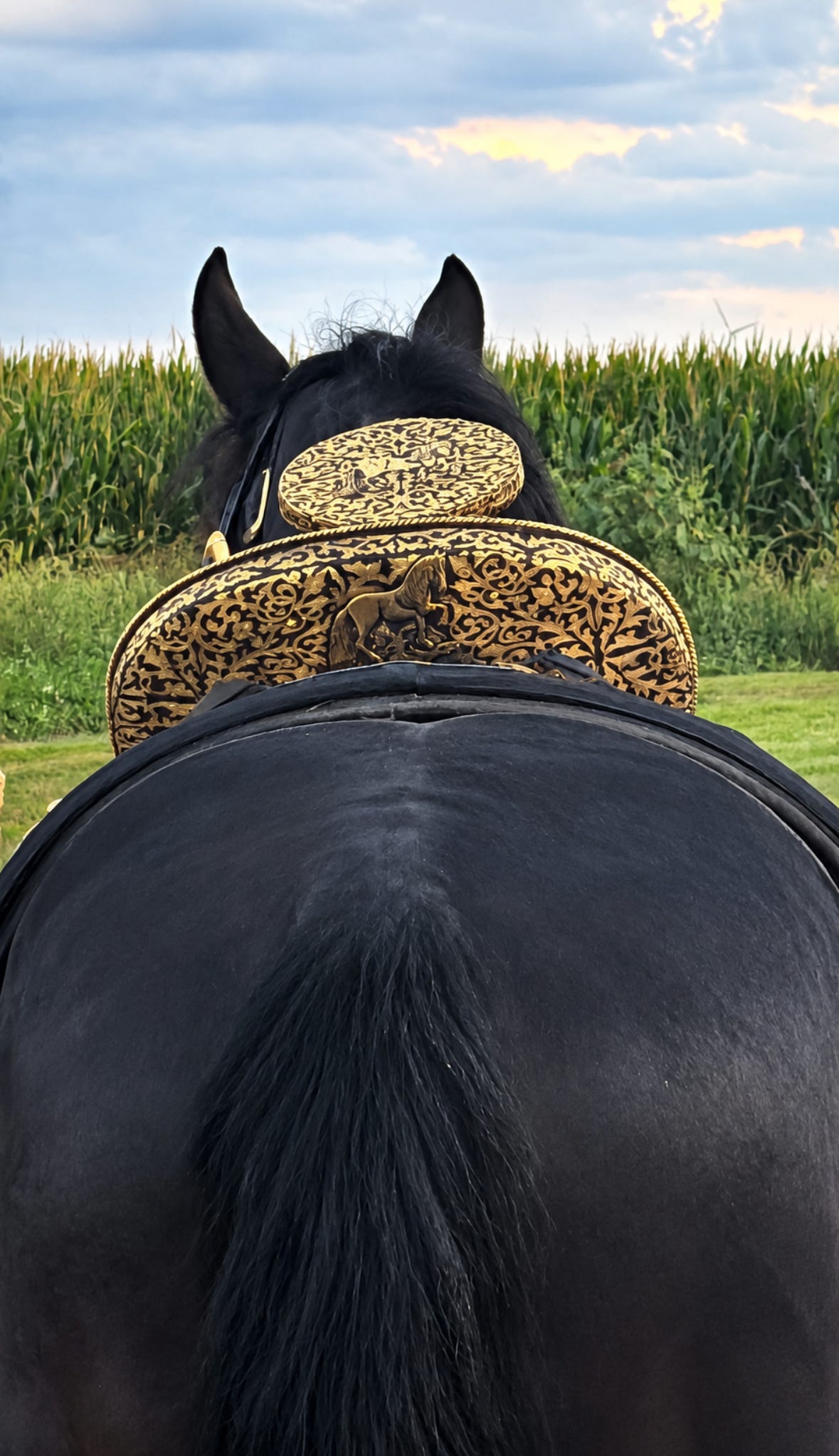
I’m on a farm on a Saturday with a horse.
Saturday. Farm. Horse.
Three remnants of a bygone era, of my former life, my entire life, that overnight stopped being my life.
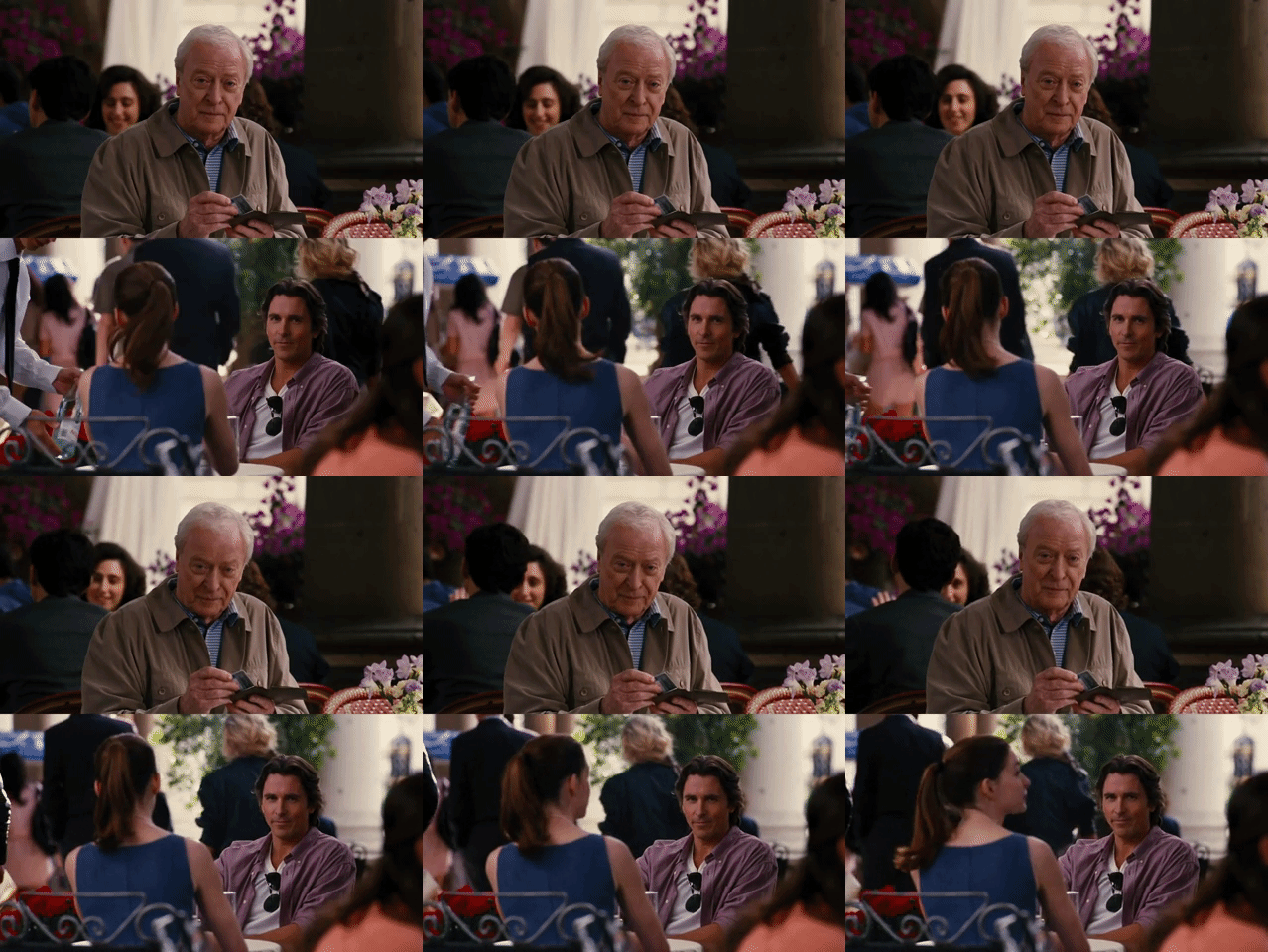
People tend to look back at their childhood with nostalgia, sometimes wishing they could go back. But I don’t. I look at mine the way Alfred looks at Bruce at the end of The Dark Knight Rises. I acknowledge it, accept it for what it was, and then get up from the table and continue.
Growing up, every Saturday my grandpa would pick me up at around two or three in the afternoon. We’d stop at una panadería, where he’d buy me a pack of Venezuelan Oreos[4], a Cocosette wafer, and a chicha el Chichero, and then we’d continue on to the farm. On the way there, my grandpa would call the ranch manager: “Please have a horse saddled for Juan David. A gentle one, of course.”
At first, one of the farm employees would walk the horse around the farm with me sitting on top, then bring me back. As I got older, they stopped walking with me. I would take the horse out by myself, come back, take off the saddle, hose him down, and let him back into the pasture.
Then I got older again. If we needed to bring the bulls or other animals into the corral, I could get on a horse and go help.
Being able to do that meant I was capable enough to do three things: not fall off, control the horse, and figure something out if a bull—or worse, a cow protecting her calf—decided to charge.
The first time I helped was one of the proudest days of my life. I went from being looked after to being useful. Of course, I wasn’t ready for the more complicated animals yet, but I was now an option if other people were busy. Sometimes you needed two horsemen, especially when you were moving more than a hundred cattle.
The farm changed for me, and I changed for the farm.
Over the years came more crossings: learning to ride a horse well enough not to die or get hurt, designing and making my first cattle brand and using it on my first animals, learning to drive a tractor, learning to drive a car. It was private property, so I was already driving around at eleven or twelve.
Getting older, or at least getting taller, meant being able to do more useful things, and being able to do more useful things meant being trusted with more responsibility. And what is adulthood, really, other than getting more responsibility?
Watching her turn fifteen in public made me realize that I had grown up through rites of passage too.[5]
On the farm, they happened quietly. Nobody announced that I was old enough to ride alone, help move cattle, or drive the tractor. One day somebody walked beside the horse. Then, eventually, they didn’t. The ceremony was simply being trusted with something I couldn’t be trusted with before.
A quinceañera does almost the opposite.
It takes something that normally happens too slowly to notice—growing up—and makes everyone stop and look.
Sometimes growing up means being witnessed.
Graduations are supposed to mark a crossing too, but mine never felt quite like this. You sit among hundreds of people dressed exactly like you, wait for your name, cross a stage, shake somebody’s hand, and disappear back into the crowd.
Here, the crowd had gathered because of one person.
There was no disappearing.
Turning fifteen itself takes no courage. Time does that for you. But standing in the middle of a room while everyone you know watches you turn fifteen is something else.
You have to enter knowing everyone is looking. You have to dance. You have to stand there while people speak about you. Your parents have to get up in front of everyone and say things that, on any normal Saturday, might remain safely unsaid.
And that was the part of rites of passage I had never really understood. They aren’t only for the person crossing the line. They need witnesses. Growing up changes how you see yourself, but eventually it has to change how the people around you see you too.
Which made me start watching her parents.
Her mother smiled from ear to ear, the kind of smile that seemed only a few degrees away from tears.
Her father was different.
Most of the night he stayed a little outside the spotlight, watching from a distance with a beer or tequila in his hand. He seemed perfectly happy to let everyone else occupy the center of the room. When the ceremony required him, though, he stepped forward. He danced. He spoke. Then, when his part was over, he drifted back to the edges again.
Mostly, he just wore this small smile.
I kept looking at him.
What was he thinking? What was he feeling?
Because if the night was telling his daughter, You are not a little girl anymore, then surely it was telling him something too.
But what?
You could see wet eyes around the room. I wondered how many of the women looking at the quinceañera were also seeing someone else. Their own daughters. Themselves at fifteen. Maybe even their own mothers. John Mayer had already written the song.
How did her mother and father not burst into tears?
How the barn wasn’t flooded remains one of the night’s great mysteries. I had FEMA’s number dialed and ready.
The closest I’ve ever been to Mexico was in a barn in the Midwest.
I’d only been to one quinceañera before.[6] That one probably cost somewhere between $80,000 and $100,000.[7] It had the dances, the food, the music, the people, all of it. But it was held in a suburban event hall. People spoke English, and the crowd wasn’t almost entirely Mexican the way this one was. I never felt like I had left the suburbs.
This one felt like a portal to Mexico. To Puebla, actually, which turned out to be where almost everyone was from. So there I was, in Puebla. Or at least I wanted to think I was.
The difference started before I even got there.
You had to drive almost an hour to get there. At first, it was still the suburbs: highways, traffic lights, office buildings, shopping centers, golf courses, cul-de-sacs, and strip malls. Then came the warehouses and distribution centers, huge windowless boxes surrounded by loading docks, trucks, and trailers. Factories. Electrical substations. Data centers behind fences, surrounded by power lines and equipment.
Then, little by little, all of that started disappearing.
The buildings got farther apart. The roads got smaller. Two lanes. Farmhouses appeared every so often, set way back from the road. Silos. Power lines. And then mostly corn.
A lot of corn.
Corn on both sides of the road, sometimes two or three meters tall. At some point I realized I couldn’t even see over it.
The Midwest kept getting emptier until, suddenly, it wasn’t.
I turned into the ranch and there were cars everywhere. Music poured out of the barn. More than 200 people. Long tables covered with food. A griddle where two people worked constantly to keep the warm tortillas coming. A full bar with beer, liquor, soda, water, and pretty much anything you wanted.[8]
It was all sitting there in the middle of the corn.
But this wasn’t the first time America had introduced me to Mexico.
The first time I ate Mexican food was in America. The first time someone called me Mexican was in America.[9] The first time I had spicy food was at Chipotle.[10]
You come to America, you eat hamburgers and hot dogs. But you also eat tacos. Tacos are as American as the good ol’ American hamburger.
And the girl at the center of all this was American too.
Her parents were from Mexico. The traditions were too.
But she was born in the United States, and she likes some of the same things another fifteen-year-old girl might like at a Sweet Sixteen. I’ve never been to one, so I have no idea, but I assume Lana Del Rey makes the cut.
She made the one here.
All night, I felt like I’d stepped into one of those National Geographic stories I used to read while I was learning English. A stranger enters another world, watches closely, asks questions, takes pictures, and slowly discovers that the distance between people is smaller than it looked.
I remember thinking, Oh, so this is what it feels like to be inside one of those stories.
But there were still a few things I did not understand.
The dance floor, for example.
A song would start and everyone would get up. Parents, grandparents, teenagers who had brought dates. Then the song would end and, almost immediately, everyone would go back to their tables.
Thirty seconds later, another song would start.
Everybody got up again.
This happened over and over. Why not just stay on the dance floor?
The dance floor had two settings: 0 and 1.
Dancing here was discrete, not continuous.
Then the bass hit again. Diamonds - Jacob Plant Dubstep Remix started blasting as they wheeled out an enormous cake.
The cake, naturally, had its own entrance.
And watching it come out, I suddenly remembered something.
Oh, yeah.
This was a birthday party.
I had spent the evening thinking about Mexico and America, childhood and adulthood, fathers and daughters, horses, rites of passage, and what people do when time takes someone they love and gives them back changed.
The girl had turned fifteen. That was why we were here.
By then, I had also spent hours being offered things. A beer beside the horse. Food. Drinks. Another plate. Another chair.
Pásele.
Which made me think of the Greeks.
The Greeks had xenia: hospitality toward strangers. Treat the stranger well. You never know whether the person at your door might be a god in disguise.
The Mexicans, as far as I could tell that night, have something I’m calling the Pásele Law.
Pásele.
Come in. Sit down. Eat. Drink. Bring another chair. Invite somebody else.
Invite enough people, and maybe one of them turns out to be a god.
I’m no god arriving in disguise.
I’m not even Mexican.
I was just the guy asking too many questions about the horse, staring at the lights, trying to read a father’s small smile, and wishing I’d remembered my orange earplugs.
But there I was.
And now the night exists here too.
Feliz cumpleaños para la quinceañera y que cumpla muchos más,
Juan David Campolargo
P.S. There were more songs, but these are the ones I Shazam’d.
If you’re into interesting ideas (like the one you just read), join my Updates, and I’ll send you new essays right when they come out.
Notes
[1] Tetragrammaton refers to the four-letter Hebrew name of God.
[2] This happened to me recently with Proyecto Uno’s El Tiburón. I’ve known that song forever, so there was a certain sound in it that, in my head, belonged to El Tiburón. Then I heard Cheryl Lynn’s Got to Be Real and had that little shock of recognition: Wait, that’s where that came from. El Tiburón samples it. For years, I had it backward. Just listen to the first few seconds, and you’ll know what I mean.
[3] Cameron Crowe calls this feeling “happy/sad.”
I slipped into the theater. In the darkness, nobody noticed me taking my usual seat. The actors were rehearsing. All I knew was that inside the musical, struggling to get out, was an authentic feeling. It was the very thing that had kept me from being the next J. D. Atkinson, that had kept me from crossing the street and entering the finest law school in California. It was the emotion of growing up with complex feelings and finding true meaning in a song. It was the power of happy/sad.
*—*Cameron Crowe, The Uncool: A Memoir
He has been returning to this feeling for most of his career: in music, in Almost Famous, and now in The Uncool. It’s that strange coexistence of joy and melancholy, when something can make you happy and somehow hurt at the same time.
A quinceañera lives there too.
Everyone is celebrating what she is becoming while, whether they say it or not, saying goodbye to who she was.
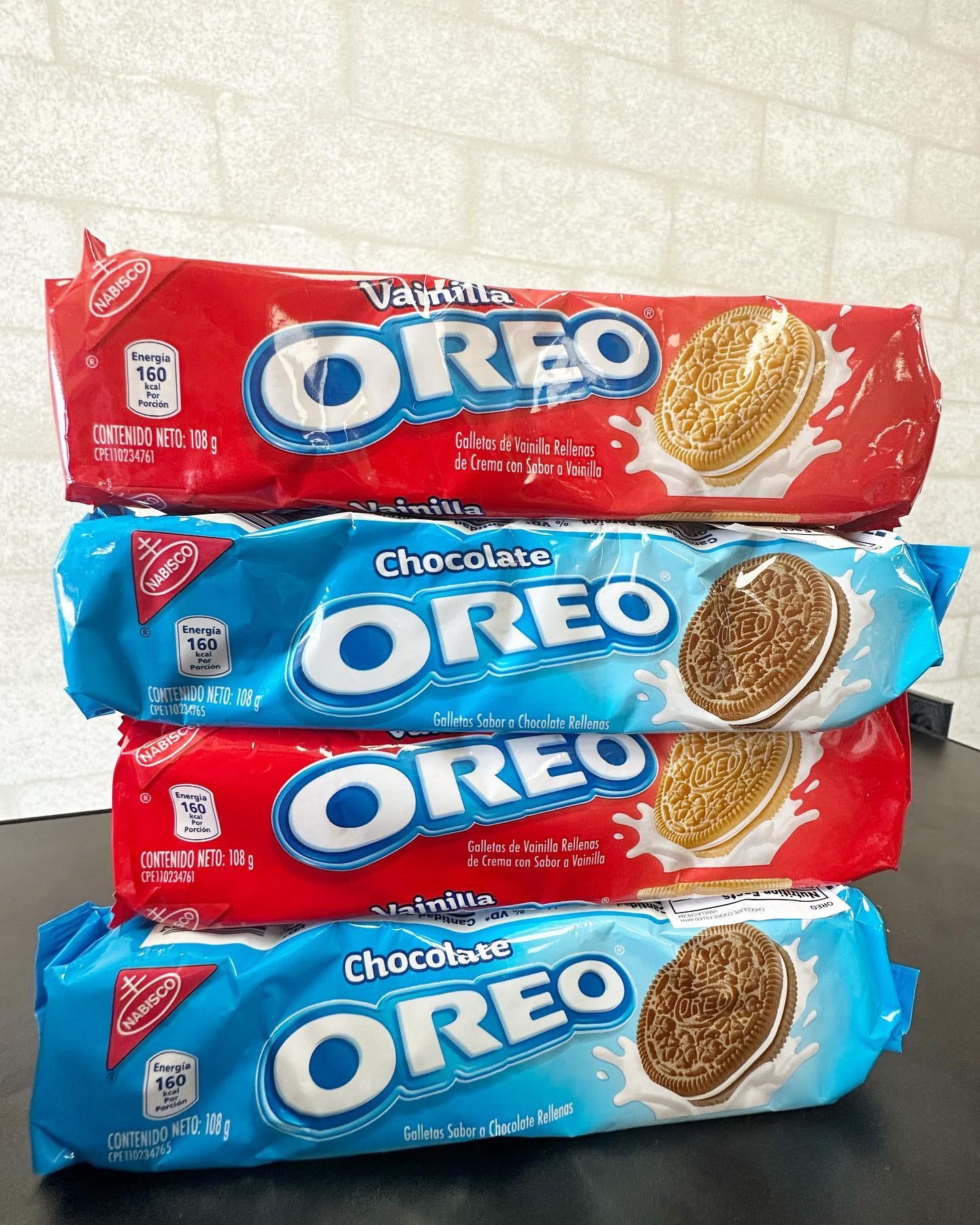
[4] WTF are Venezuelan Oreos? For starters, they’re brown, not black. They’re milder, much less sweet, snappier, and less crumbly than American Oreos.
And don’t even get me started on the vanilla flavor.
[5] There were stranger rites of passage too.
Once, there was this girl I didn’t really like, but her mom was friends with one of my aunts, and she was around my age. My grandpa more or less volunteered me to take her for a ride. So I rode around with this girl sitting behind me on the same saddle. Was that my first date? I certainly did not want to think so.
[6] What were quinceañeras like in Venezuela? I have no idea. I left before my friends turned fifteen. But from what I remember hearing, they could be pretty elaborate: choreographed dances, huge parties, sometimes even performances by artists who were still on their way up. I remember hearing stories about people like Chino y Nacho showing up before they became really famous. They probably looked different from what I was seeing here. In spirit, maybe not so different.
[7] The utilitarian part of my brain kept doing the opportunity-cost calculation.
Could this money have gone toward a down payment for her? Could they have put it in the S&P 500 and let it compound for twenty years? Probably.
And part of me thinks: maybe you try to do both.
But man, this is something else. The party is fleeting. One night and it’s gone. But the memory of it isn’t. Two hundred people were there. Her parents were there. Her grandparents were there. Her friends were there. Years from now, people are still going to remember things that happened that night.
What is money for, anyway? To spend it. And surely they did.
Maybe this is just a different kind of return on investment. EROI. Emotional return on investment.
[8] If I had to summarize what Mexican parties have in common in one word, that word would be abundance.
Plenty of everything. People who work with their hands, long shifts, service jobs, outdoor jobs, people who may not have had much growing up, but when it comes time to celebrate, there is no holding back. Food, drinks, music, people. No splitting the bill, no “what’s your Venmo?” Just pure abundance. There is something almost anti-efficient about it. Nobody is optimizing the party. Nobody is asking what the minimum required amount of food is for 217 guests. The point is to have more than enough, and they always, always, always do.
The more the merrier.
[9] A separate geography lesson.
Once upon a time, I used to live in Washington, D.C., and one day we ended up inside one of those presidential institutions with portraits, donors, security, interns, important-looking people, and enough American flags to make you stand a little straighter.
We got into a conversation with one of the students working there for the summer before law school. Her family was very much part of the Washington establishment, specifically the three-letter-agency part of it, the kind you usually hear about in movies.
At some point, Pope Francis came up. She was Catholic.
She thought Argentina was a state in Spain.
So I pulled out my phone and showed her a map.
Argentina, it turns out, is still in South America.
I like to think I prevented at least one future foreign-policy misunderstanding that afternoon.
At least she didn’t think Spain and Mexico were the same thing.
[10] “But Chipotle isn’t Mexican!!! Respect my culture.” Brother, in that case, hamburgers are German.
In 200 years, tacos will be a quintessential American staple food alongside German hamburgers, Italian pizza, German hot dogs, and French fries. Honestly, we may already be there.
Burritos, anyone?